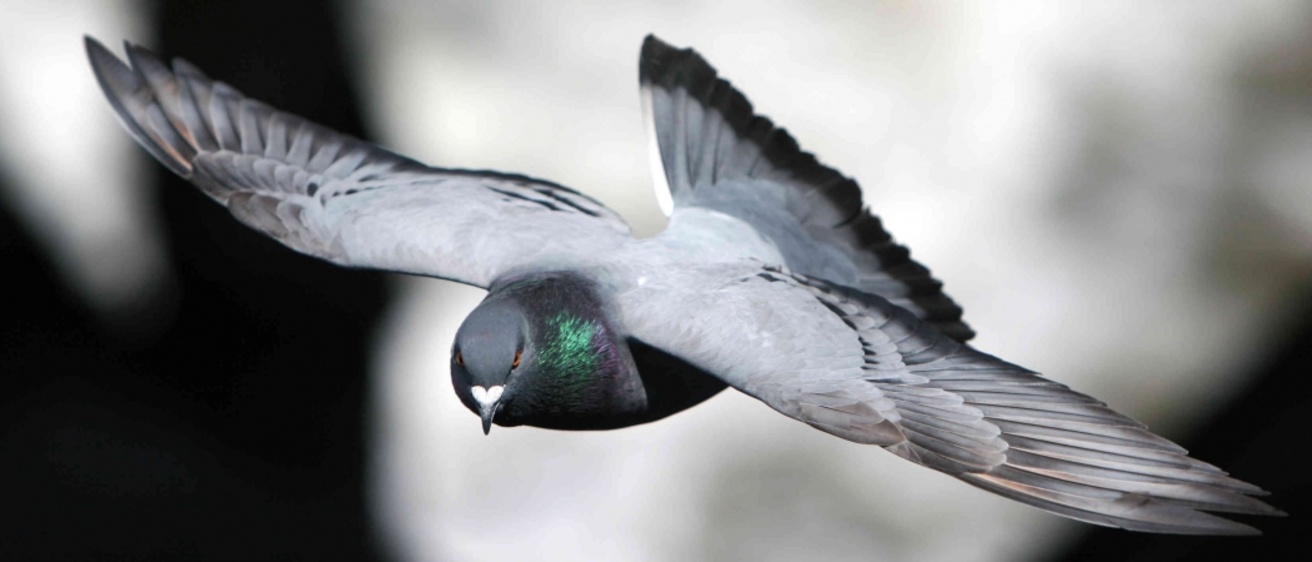
The Comparative Cognition Laboratory is a part of the Department of Psychological and Brain Sciences at The University of Iowa. Our research concerns the experimental investigation of cognitive processes in adaptive behavior, with an overarching interest in comparing cognition in humans and nonhuman animals. Specific research topics include: category learning, cognitive flexibility, and same-different conceptualization. The evidence that we collect constantly surprises us and forces us to view human cognition in a fresh light.
News and Announcements
Congratulations, Bella and Caleb!

Paper in press
Do behaviors become more or less variable over time? Since Thorndike’s pioneering research, investigations into behavioral variability have posed a challenging theoretical puzzle: Some indicate a winnowing of behavioral variants, whereas others suggest an ongoing waxing and waning of even dominant behavioral variants throughout rewarded training. Here, we found that pigeons progressively narrowed their behavioral repertoire while retaining some diversity throughout. This suggests an adaptive balance — what might be called "the edge of chaos" — in which reliable reward-securing responses are preserved alongside behavioral flexibility, allowing animals to adapt if contingencies shift or better options emerge. Wasserman, E. A., Orr, O. R. P., & Li, S. (in press). Variability, stability, and the Law of Effect. Journal of Experimental Psychology: Animal Learning and Cognition.

Recent paper
We found that pigeons displayed distinctive learning and attentional patterns. Half of our pigeons showed preferential, even exclusive, use of the most relevant category features, but the other half distributed their attention among several of the available features. These results highlight the importance of combining an individual differences approach along with the pursuit of general cognitive principles. Castro, L., Albrecht-Buehler, A., & Wasserman, E. A. (2026). Focused and distributed: Diverse attentional profiles in pigeon category learning. Learning & Behavior.